Southeast Asia
Vietnam
A long, narrow country best planned as a north-to-south journey, with distinct food cultures and climates along the way.
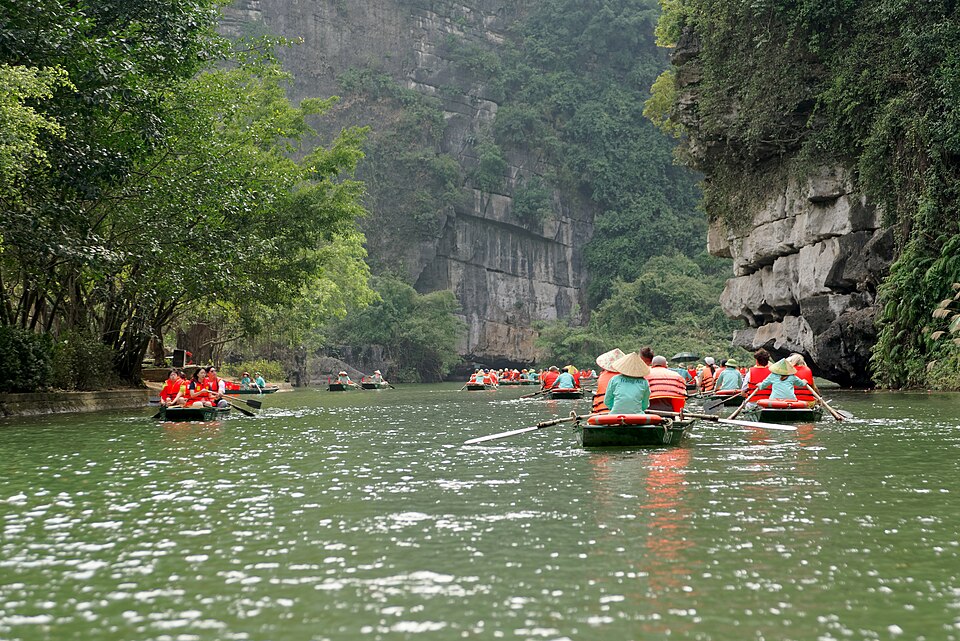
Vietnam's shape makes routing straightforward but distances real. Most trips run between Hanoi and Ho Chi Minh City, choosing a handful of stops along the coast and in the mountains.
Food changes noticeably by region: Hanoi's noodle soups, central Vietnam's spicier dishes in Hue and Hoi An, and the herb-heavy cooking of the south.
Weather varies by region at the same time of year, so a single 'best season' rarely applies to the whole route.
Places and experiences
- Hanoi's Old Quarter
- Dense streets organised historically by trade; a strong introduction to northern food.
- Ha Long Bay or Lan Ha Bay
- Limestone karsts best seen on an overnight boat rather than a rushed day trip.
- Hoi An
- A preserved trading port with lantern-lit streets and nearby cycling through rice fields.
- Hue
- The former imperial capital, with its citadel and royal tombs along the Perfume River.
- Mekong Delta
- River markets and village life, reachable from Ho Chi Minh City.
A sample outline
Days 1–3
Hanoi and the Old Quarter.
Days 4–5
Overnight boat in Ha Long or Lan Ha Bay.
Days 6–9
Fly to Da Nang; Hoi An with a day in Hue.
Days 10–12
Ho Chi Minh City and a Mekong Delta day trip.
Practical planning
- Check current visa arrangements for your nationality well before travel.
- Overnight trains are an option on parts of the route; domestic flights save time on longer legs.
- Crossing busy streets: walk at a steady, predictable pace.
- Central Vietnam can see heavy rain and typhoons in autumn.
Entry rules depend on nationality. Check visa information.